
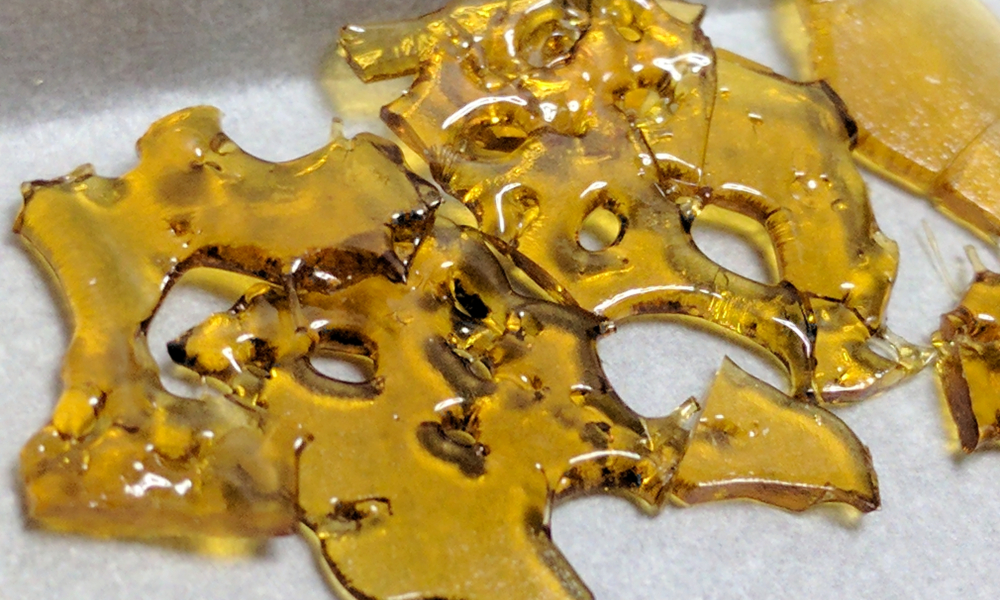
Cannabis concentrates have been a part of human consumption for as long as cannabis has been enjoyed, but the way they are made and consumed has drastically evolved in recent years. One of the most popular and visually striking forms of concentrate is shatter. With its crystal clear sheets of golden glass, shatter is a symbol of the new wave in cannabis technology and culture. Its shimmering clarity and enticing aroma make it a highly sought after concentrate.
The history of shatter can be traced back to the early 1990s when the market for hash in the United States shifted from imported bricks to domestically produced dry sift and ice water hash. However, the real revolution in cannabis extraction came with the use of solvents. Solvent extraction, which is how shatter is made, involves running a solvent through cannabis plant matter to extract the desirable oils. Butane has emerged as the most popular solvent for this process, leading to the term Butane Hash Oil or BHO.
It’s important to note that while all shatter is BHO, not all BHO is shatter. BHO can take on many forms, including the newly popular terp sauce. To understand this, think of BHO as the main ingredient, like sugar syrup, and shatter as one of the many forms it can take, like a hard candy or taffy. Shatter gets its name from its brittle, glass-like consistency, while other forms of BHO may have a more malleable texture.
In conclusion, shatter is a highly coveted concentrate that represents the advancements in cannabis technology and culture. Its production through solvent extraction has revolutionized the market and continues to inspire new forms of concentrates. So next time you see a slab of shatter, take a moment to appreciate the history and evolution behind this popular concentrate.