
It’s farmin’,” I like to say every time a minor crisis or impending disaster strikes on the farm. Whether it’s a sudden change in weather, a broken irrigation system, or a malfunctioning tractor, there always seems to be a new challenge to face. And just when you think you’ve seen it all and solved every problem, another one pops up, demanding an immediate solution.
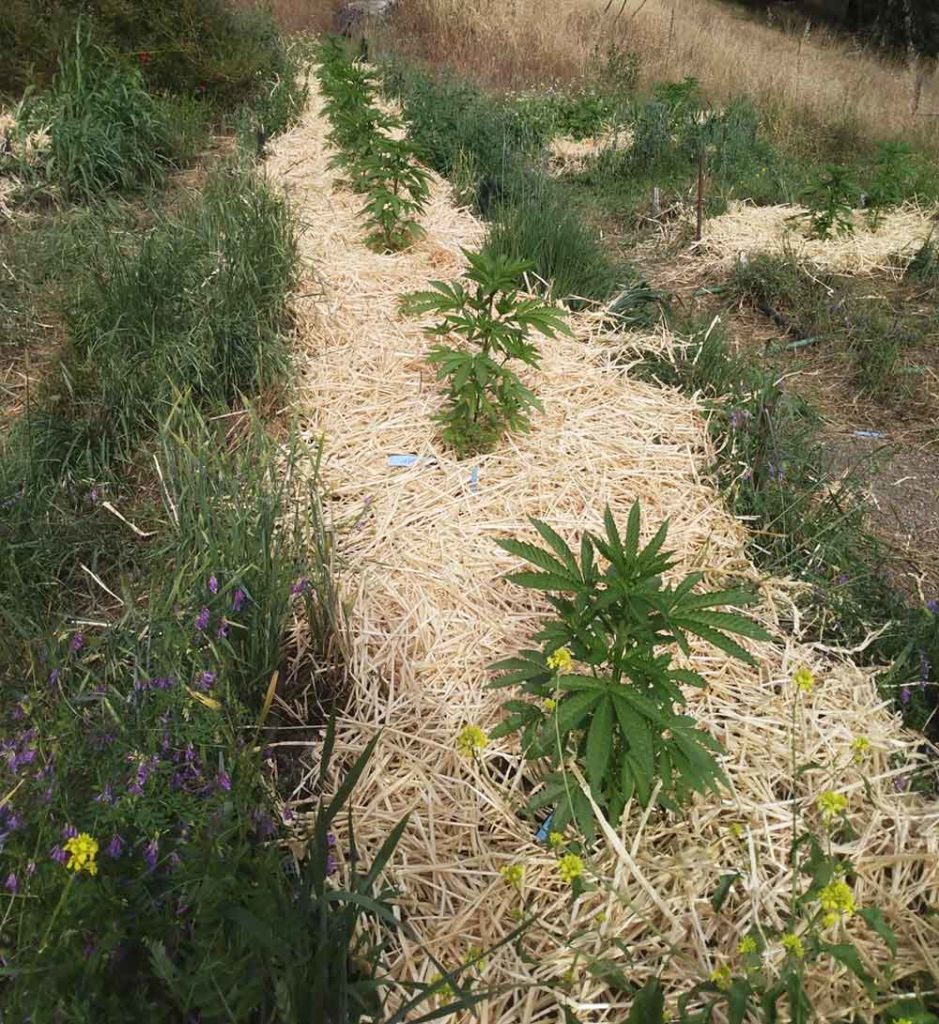
This year, we were hit with the challenges of an unusually cold spring, which stunted our cannabis seedlings and delayed our grow cycle. Last year, it was a family of field mice feasting on our delicate seedlings, which were left exposed on the ground. To prevent a repeat of this disaster, we elevated all our pots on tables and placed the legs in bins of water. We also switched to using smaller pots filled with a mixture of coir, rice hulls, and worm castings to save on potting soil.
But no matter how much we plan and prepare, there’s always something unexpected that comes up when growing outdoors in the sun. We’ve learned to adapt and move with the ups and downs of Mother Nature, constantly learning and growing alongside our garden.
This year, the weather was a rollercoaster of rain and sun. In early April, just as we had cracked our seeds and planted them, the weather went haywire. It was a wild ride of rain, hail, snow, and then sudden bursts of sunshine and warm temperatures, followed by more rain and freezing nights. This unpredictable pattern continued throughout the spring, and it wasn’t until later that we realized our mistake with the tiny pots. The extreme weather changes caused the temperature around the roots to fluctuate, and a larger pot may have provided better protection.
At one point, I even considered getting heating pads for the tiny pots, but ultimately decided against it due to the need for a running generator all night. Plus, I was sure the weather would warm up soon. But it didn’t. In hindsight, we probably should have invested in those heating pads when I first thought of them.
As anyone in Northern California can attest, the weather in 2022 was unprecedented. It wasn’t just January that was affected, but also “June-uary” and “Febru-uly.” The heat and dryness continued for months, with the most consecutive days without rain in recorded history. Climatologists studying tree rings and glaciers even declared it the driest three years since 821 CE, over 1200 years ago.
So going into planting season, the last thing we expected was cold weather. To combat the unpredictable conditions, we built a long tunnel using rebar, PVC, and greenhouse plastic. We also brought in a propane heater for the freezing nights. But even with all our preparations, farming always keeps us on our toes, reminding us to be flexible and adaptable in the face of Mother Nature’s ever-changing moods.