Cannabis Consumers Are Losing Faith in Washington—and Neither Party Should Ignore It
For years, cannabis has been one of the few issues capable of bridging America’s political divide. Conservatives have championed states’ rights and limited government. Progressives have emphasized criminal justice reform, medical access, and social equity. Meanwhile, millions of Americans simply want the freedom to enjoy or benefit from cannabis without navigating a maze of conflicting state and federal laws.
That’s why a new poll released by NuggMD and Marijuana Moment is worth paying attention to.
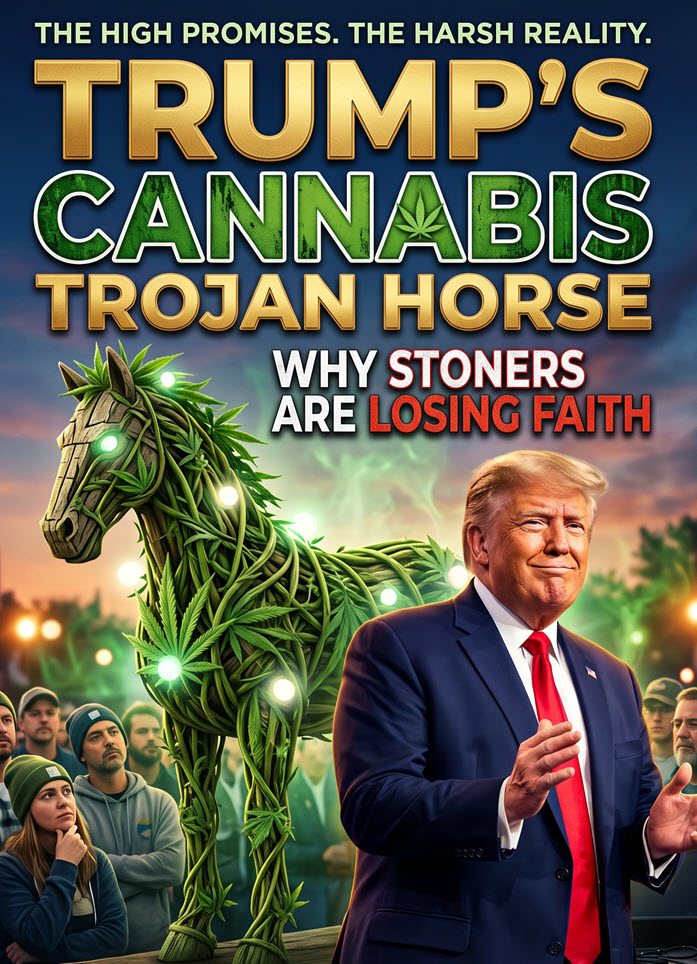
According to the latest survey of cannabis consumers, approval of the Trump administration’s handling of marijuana policy has fallen from 73 percent last quarter to just 48 percent today. Thirteen percent now disapprove, while an eye-catching 40 percent say they have no opinion at all. While this survey reflects cannabis consumers—not the general public—it offers an interesting snapshot of sentiment within one of the country’s fastest-growing consumer communities.
The numbers raise an obvious question: what changed?
The answer may have less to do with partisan politics and more to do with expectations. When optimism surrounding federal cannabis reform gained momentum earlier this year, many consumers believed meaningful progress was finally within reach. Federal rescheduling discussions generated excitement, businesses anticipated long-awaited reforms, and investors began paying closer attention to the industry.
Months later, many consumers simply aren’t seeing enough movement.
That’s not necessarily an indictment of President Trump. It’s also not an endorsement of Democrats. In reality, cannabis advocates have expressed frustration with both parties over the years. Republican administrations have often spoken about respecting state authority while stopping short of sweeping federal reform. Democratic administrations have campaigned heavily on legalization and criminal justice reform, yet many supporters feel progress has been slower than promised.
The result is an industry that has heard plenty of promises but is still waiting for many of the biggest obstacles to disappear.
Cannabis businesses continue to struggle with banking restrictions. Federal tax rules still punish legal operators under Section 280E. Scientific research remains more difficult than many experts believe it should be, and businesses operating legally under state law continue to navigate significant uncertainty at the federal level.
For most consumers, those issues matter far more than political talking points.
Perhaps the most fascinating finding from the survey isn’t the decline in approval—it’s the 40 percent of respondents who selected “no opinion.” That’s an unusually large share for a community that has historically paid close attention to cannabis policy.
There are several ways to interpret that number. Some consumers may simply be tuning out politics altogether. Others may feel insulated because cannabis is already legal where they live. But it’s also possible that many have reached a point where announcements and campaign rhetoric no longer carry much weight. They’ve heard ambitious promises before. Now they’re waiting for tangible results.
That’s an important distinction.
Cannabis has matured into a legitimate industry generating billions in economic activity, supporting hundreds of thousands of jobs, and serving millions of consumers across the country. As the industry evolves, expectations evolve with it. Consumers are becoming less interested in hearing which party supports reform in theory and more interested in seeing which leaders can actually deliver measurable progress.
Ultimately, this shouldn’t be viewed as a Republican story or a Democratic story. It’s a cannabis story.
The community has become more sophisticated, more informed, and perhaps a bit more skeptical. Politicians from both parties have an opportunity to earn that trust, but doing so will require more than speeches, social media posts, or campaign promises. It will require action.
Whether that means completing federal rescheduling, reforming banking laws, addressing unfair taxation, or simply creating greater regulatory certainty, cannabis consumers appear to be sending a clear message: they’re ready to judge leaders by outcomes rather than intentions.
And in today’s cannabis industry, that’s probably the healthiest kind of accountability there is.