
Up in the Mendocino Highlands, harvest typically starts in late September or early October, depending on the cultivar. Some girls want to come in early, and some may stretch it out until early November. Here at Swami Select, we had an Ethiopian Sativa one year that finished after Thanksgiving—not what you want because of the increased likelihood of fog, rain or frost that late in the season.
This is the tensest time of year, because there are still so many ways that you could lose some or all of the crop. In the old days, the paranoia was palpable as October arrived. While the crop ripened, every day that you waited to cut increased the chances of getting busted by the cops or being robbed by “marijuana rustlers.”
Potential Threats
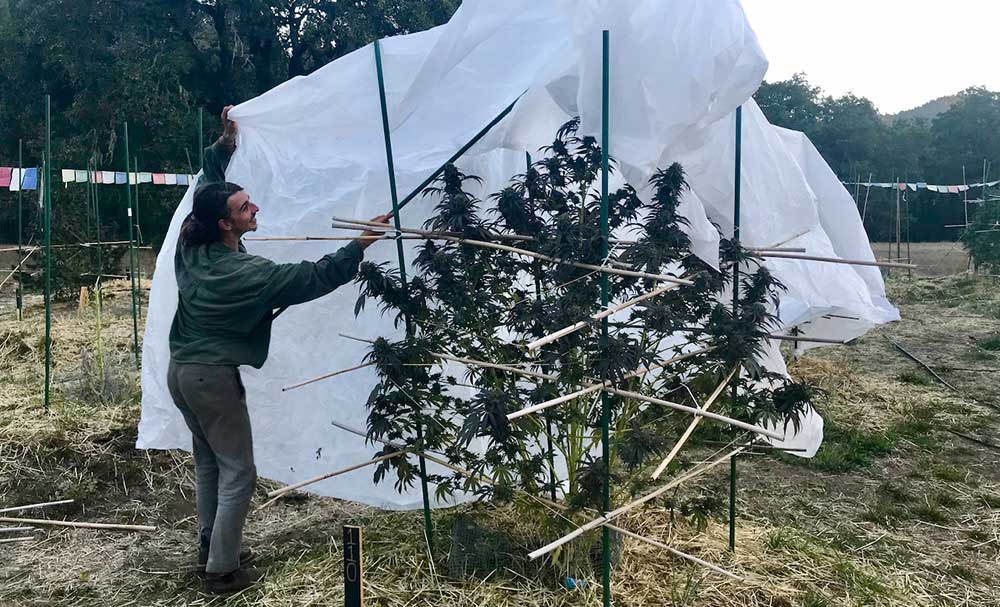
Franklin putting up the frost cloth. PHOTO Nikki Lastreto
We still need to be vigilant for other threats such as russet mites, aphids and latent hop syndrome. If the rains start in September, or the mornings bring heavy fog, mold and powdery mildew may develop. For the latter, foliar spraying with hydrogen peroxide can help, but the best preventative is spraying with a fermentation of horsetail starting in June.
Frost can also be a threat. The later into October and November the harvest extends, the more likely a heavy frost will hit, especially in mountain valleys. Most hardy plants can survive one early morning frost if it is only in the mid-twenties, but two or three frosts will kill many plants. Be prepared to cover each plant with frost cloth and they will survive.
These days in California and Oregon, outdoor crops face an additional threat from wildfires, which means you need to have an evacuation plan for your crew, plus a survival plan for the crop. An automated irrigation system will keep the girls alive if you need to bail.
If the crop gets dusted with white ash from the fires, use a leaf blower to blow it off the leaves and then spray with diluted hydrogen peroxide (H2O2). If the smoke at harvest is dense for days, after cutting and weighing each plant, dip each branch in dilute H2O2 and then dip in clean water; then hang to dry outside before bringing the branches into the drying room.
Yellow leafing the plants is paramount, and on the day before harvest, pull off most of the sun leaves from the plants you will take. As the days get shorter, keep cutting back on water, unless it’s super-hot, and stop feeding or using compost teas a week to ten days before harvest.
The Science (and Art) of Harvesting Cannabis
Swami talking to plants at harvest muscle testing. PHOTO Nikki Lastreto
Assuming that you’ve done all the preparations mentioned in the previous article, you now must devise the exact procedure of harvest. This involves several steps:
Deciding the exact moment to cut each plant. Whether to take the whole plant or make two or three cuttings. How to transport the cut plants to the drying facility. For legal growers in California, how to weigh and