
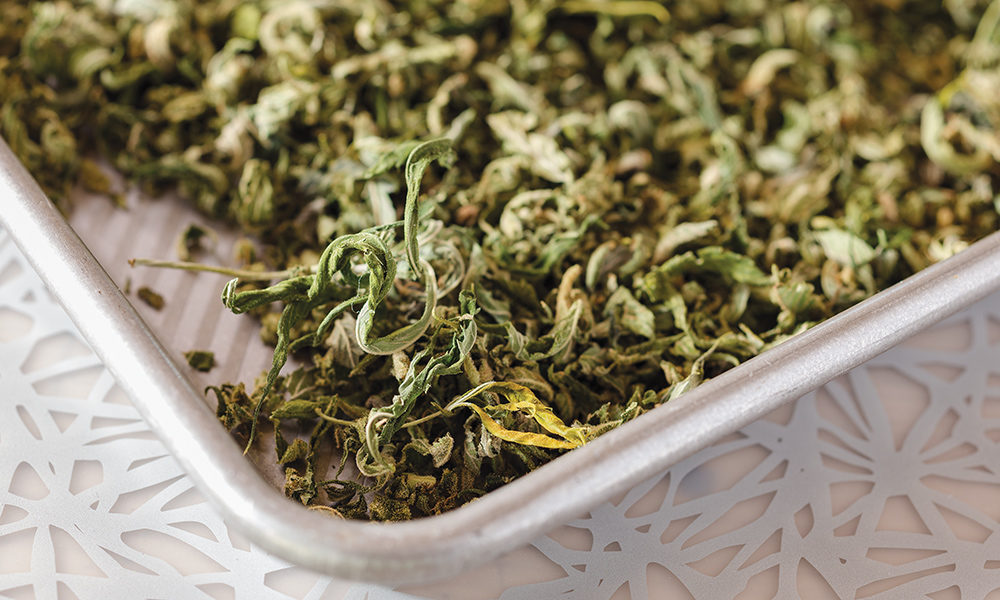
Decarboxylation is a crucial step in unlocking the full potential of cannabis flowers and edibles. It is a process in which carbon dioxide (CO2) is released from a stable molecule, leaving behind a lighter substance. Think of the atoms in a molecule as billiard balls, each with its own size, weight, and position. As the CO2 floats away, the remaining substance becomes lighter, similar to a dry towel being lighter than a wet one.
This process is typically achieved through heating, but can also occur through exposure to specific frequencies of light or certain substances like molecular oxygen. By knowing the weight of the molecule before and after decarboxylation, the percentage of mass lost can be calculated. For example, if CO2 makes up 10% of the molecule’s weight, then 90% of the mass will remain after decarboxylation. This means that continuously heating 100 grams of the substance will eventually yield 90 grams of the decarboxylated substance, with the remaining 10 grams representing the weight of CO2 that has been released.
Decarboxylation plays a crucial role in the potency of cannabis as medicine. The cannabis plant produces cannabinoid acids, such as THCA, and it is only through decarboxylation that these acids are converted into active cannabinoids like THC. This process typically occurs through smoking or baking in edibles. Most cannabinoids lose approximately 87.7% of their mass during decarboxylation. For example, if you start with 100 grams of crystalline isolate of a cannabinoid acid, after decarboxylation you will be left with 87.7 grams of THC.
This is important for producers of cannabis-infused products and hash oil, as they must ensure that their products are properly decarboxylated before selling them. It also affects the labeling of raw cannabis products, such as cured flower. When tested, the lab will report the levels of both THCA and THC. However, the amount of THC observed directly by the lab may vary depending on how fresh the flower is and how much it has been exposed to light and air. This can make it challenging for dispensaries to accurately advertise the potency of their products, as they must either report both numbers or use a theoretical conversion. This is a complex issue that requires careful consideration.
In summary, decarboxylation is a crucial process in unlocking the full potential of cannabis as medicine. It allows for the conversion of inactive cannabinoid acids into active cannabinoids, making them more potent and effective. Proper decarboxylation is essential for producers and sellers of cannabis products, and it also affects the labeling of raw cannabis flower. Understanding the science behind decarboxylation is key to fully enjoying the benefits of cannabis.