
Rescheduling was the first item on the agenda at this year’s New York medical cannabis symposium. It’s also the question doctors in the state’s program are now having to work through with their patients.
The New York State Office of Cannabis Management (OCM) and Montefiore Einstein co-hosted the 3rd Annual Cannabinoids in Clinical Practice and Research Symposium on Nov. 19 and 20 at the Westchester Marriott in Tarrytown. Physicians, nurses, researchers, trainees and public health officials attended. Thursday evening opened with a panel called “Rescheduling and the Future of Cannabis in Clinical Practice and Research,” moderated by Dr. Julia Arnsten of Montefiore Einstein. The panelists were neuroscientist Yasmin Hurd, PhD, of the Icahn School of Medicine; Dr. Nirupa J. Raghunathan of Memorial Sloan Kettering Cancer Center; and Norm Birenbaum, former founding president of the Cannabis Regulators Association.
The topic is timely. In late April, the federal government moved FDA-approved cannabis drugs and cannabis sold under state medical licenses into Schedule III. A separate proposal to reschedule all marijuana went through DEA hearings over the summer, but no final decision has been made.
Inside the Program
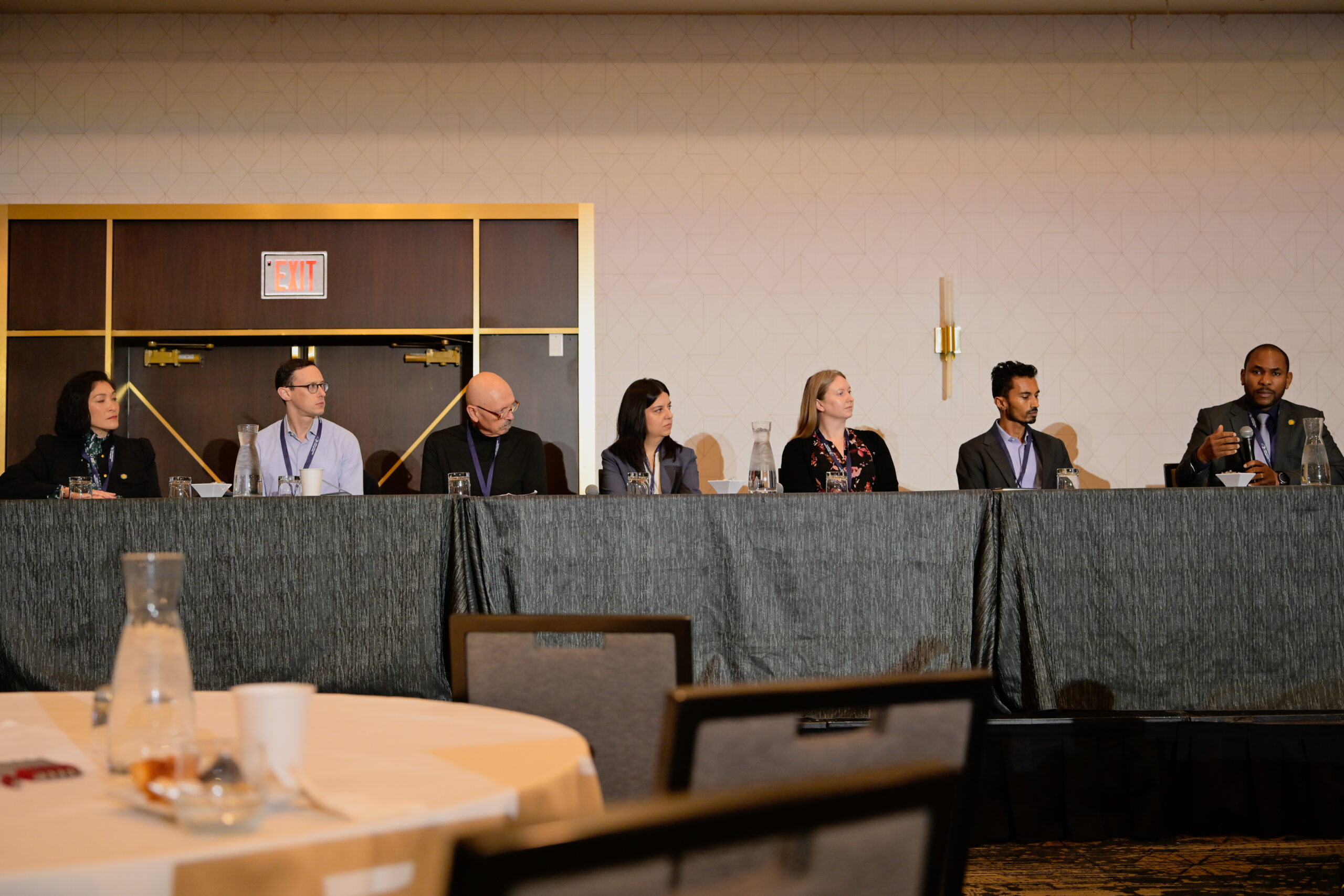
From left: OCM Chief Medical Officer Dr. June Chin; Dr. Joshua Rein of Mount Sinai; Dr. Wilbur Hitt of Albany Medical Center; Alexandra Sideris, PhD, of Hospital for Special Surgery; Jessica Kruger, PhD, of the University at Buffalo; Dr. Jashvant Poeran of Hospital for Special Surgery; and OCM Executive Director John Kagia at the Center of Excellence Partner Panel.
Friday began with remarks from OCM Executive Director John Kagia, OCM Chief Medical Officer Dr. June Chin and Montefiore Einstein’s Dr. Deepika Slawek. Three keynotes followed. RAND drug policy researcher Beau Kilmer, PhD, covered lessons from legalization. Dr. Brooke Worster of Thomas Jefferson University asked whether cannabis works best as an add-on, an alternative or an obstacle in clinical care. Dr. Chinazo Cunningham, commissioner of the New York State Office of Addiction Services and Supports, closed the day with a talk on reducing harm.
Breakout research covered topics such as how well consumers understand New York’s required product labels, cannabis drinks as a substitute for alcohol, and biomarker research in dementia patients.
“Progress in medicine does not come from everyone agreeing; it comes from asking better questions,” Chin said.
Kagia framed the event as part of a larger goal. “New York is not simply participating in the national conversation on medical cannabis; we are helping lead it,” he said.
Worster pointed to how much is still unknown. “There is still a great deal we do not know about cannabis, and that uncertainty is exactly why gatherings like this matter,” she said.
New York’s Medical Program by the Numbers
OCM research on three years of patient experiences in New York’s medical cannabis progra