
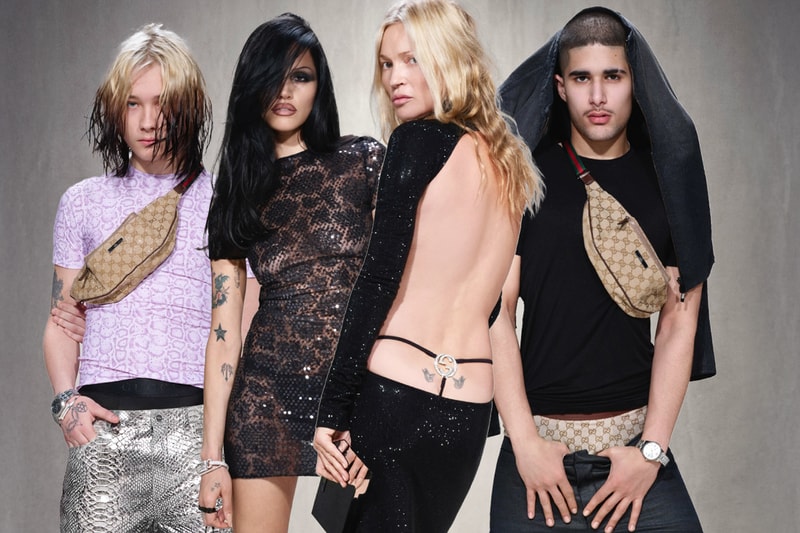
Demna’s runway debut for Gucci last Friday was arguably the most anticipated show at Milan Fashion Week, but with that comes the scrutiny endemic to leading a “superbrand” like Gucci. Furthermore, if your name is as polarizing as Demna’s, you’re sure to ruffle a few feathers.Expectedly, the runway show veered in a direction different from Sabato de Sarno’s two-year run, but stood in particular contrast to Alessandro Michele’s two-decade tenure. Whereas Michele indulged in ‘70s maximalism, logomania, and busy patterns, Demna instead returned to the sexy minimalism of the brand’s first non-Gucci creative director, Tom Ford, who arrived in 1994.“I don’t want it to be intellectual, but I want Gucci to be a feeling,” Demna said in a letter ahead of the debut. At the finale, Kate Moss wore the iconic Gucci G-string unveiled at Tom Ford’s SS97 show—arguably the moment Gucci, the feeling, began. View this post on Instagram A post shared by HYPEBEAST (@hypebeast) Some critics saw the presentation as lackluster, and some went as far as comparing the collection to fast fashion brands. Indeed, models like Gabbriette and Emily Ratajkowski walked the runway in short, skin-tight numbers you might see at a shop like Fashion Nova. Memes and comments also likened their exaggerated movements to NPCs from Grand Theft Auto. Standing out among the male models were emerging underground rappers like Fakemink and Nettspend, dressed like they were pulling up to the afterparty rather than the show.Has Demna committed sacrilege against the house of Gucci? Or might he actually be onto something?”Gucci is not a “maison”, it does not have couture roots, it’s not based on a myth. Gucci is a superbrand that is as much about pragmatic product as it is about emotion.” — DemnaEstablished in 1921, Gucci’s rise differs from competitors like Louis Vuitton and Hermes, who originated in the 19th century. The Florentine brand was founded at a time when new forms of marketing and manufacturing fueled growth across all industries, making branding more essential. “Gucci is not a ‘maison’, it does not have couture roots, it’s not based on a myth,” said Demna. Instead, he calls Gucci “a superbrand that is as much about pragmatic product as it is about emotion.”The “Primavera” collection was certainly pragmatic, and one could even say it was full of “regular” clothes: blank polos, t-shirts, jeans, leather jackets, and body-con dresses outnumbered the more ornate showpieces. With pretty much zero graphics, the Gucci-ness came from subtle branding: the Milanese red-and-green stripes and a modest dose of its signature monogram patterns.UK-born rapper Fakemink’s pared-back look (black skinny jeans, a black tee, and a monogram crossbody) evoked images of how ordinary people wear Gucci IRL today. Memes immediately flooded the internet with one user commenting, “everyone in Marseille dressing like this,” while another said, “baby, this IS th
Demna Gets That Gucci Is Defined by the People

Brand Spotlight
Follow Us
420 Singles