A groundbreaking clinical trial, conducted by a team of researchers from New York University and Johns Hopkins University, has recently resurfaced after a decade of silence. And the subject? Psilocybin, the psychoactive compound found in magic mushrooms.
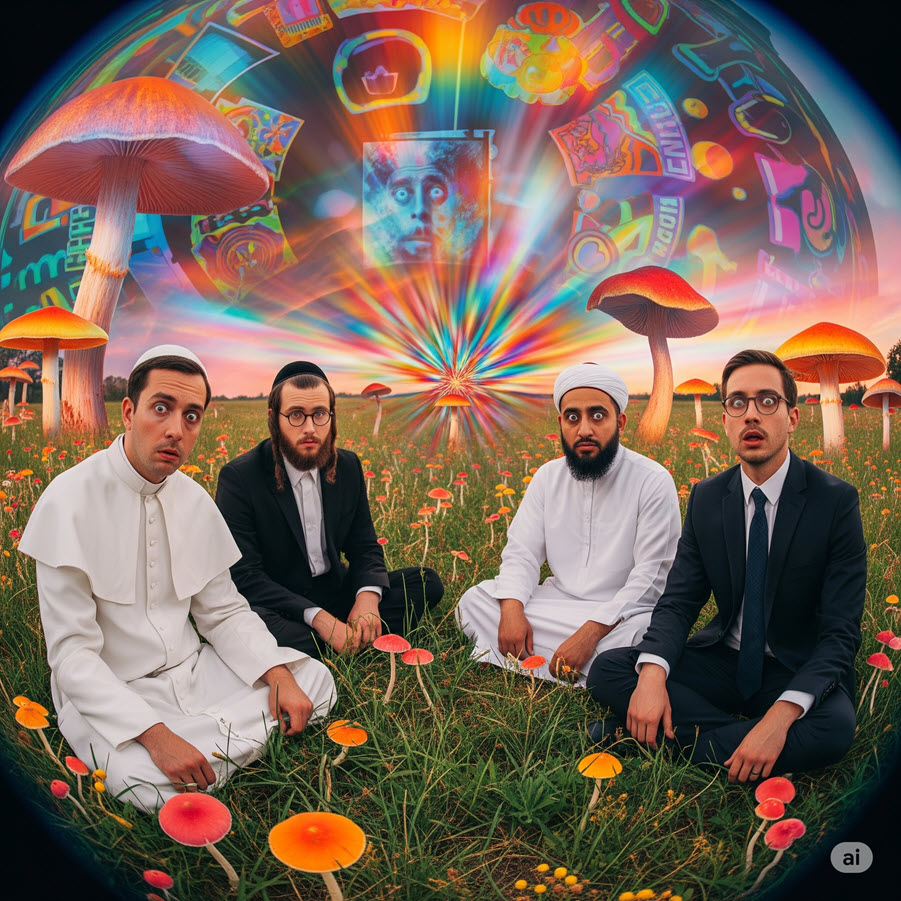
But what makes this trial truly unique is its participants – a group of clergymen from different religious backgrounds. Yes, you read that right. A Catholic priest, five rabbis, a Muslim leader, and a Protestant minister all took part in this mind-bending experiment.
The study, which was just published last month by Kathryn Post of Religion News Service, has sparked a flurry of discussions and debates. And it’s no surprise, considering the taboo nature of psychedelics in religious circles.
But why did these holy men agree to ingest a substance known for its hallucinogenic effects? According to the researchers, the goal was to explore the potential therapeutic benefits of psilocybin in treating anxiety and depression in religious leaders.
And the results? Well, they were nothing short of mind-blowing. The participants reported experiencing profound spiritual and mystical experiences, with some even describing it as a “revelation” or “encounter with God.”
But it wasn’t all rainbows and unicorns. Some of the clergymen also faced intense feelings of fear and anxiety during their trip, which they later described as a necessary part of their spiritual journey.
So, what does this mean for the future of psychedelic-assisted therapy? Will we see a shift in the perception of these substances within religious communities? Only time will tell.
But one thing is for sure – this clinical trial has opened up a whole new realm of possibilities and sparked a much-needed conversation about the intersection of religion and psychedelics. And that, my friends, is something worth talking about.