
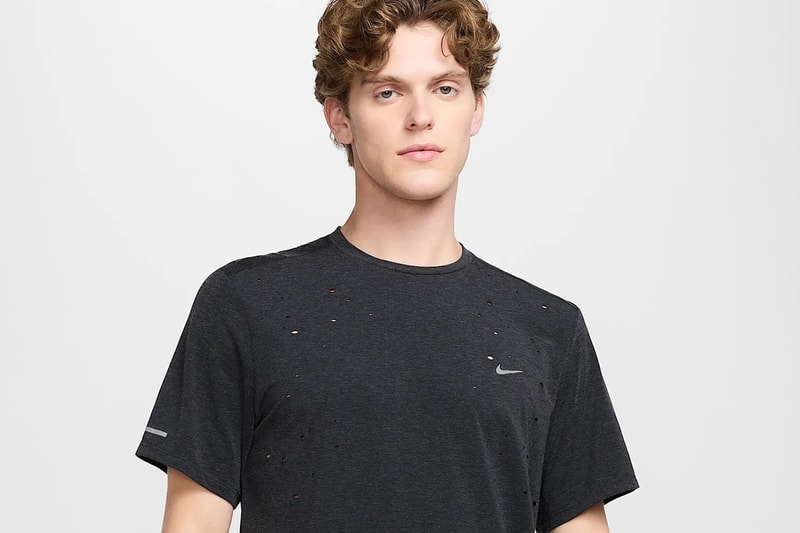
Nike’s New Running T-Shirt Sparks Controversy for Resembling SATISFY’s Signature MothTech™ Design
Nike’s latest running t-shirt has caused quite a stir online, with many pointing out its striking resemblance to SATISFY’s iconic MothTech™ design. The shirt, which features strategically placed holes for improved air circulation, has been a trademark of the French-based running brand for some time now.
However, Nike’s version of the shirt has raised eyebrows and sparked a debate among running enthusiasts. While some are calling for recognition of SATISFY’s original design, others argue that ventilation holes in running shirts are not a new concept and that Nike has used them in the past.
The controversy has even caught the attention of SATISFY, who took to social media to clarify that they have no involvement in Nike’s new product. In a post on LinkedIn, the company expressed their disappointment, stating, “We were surprised to see a product from Nike that closely mirrors our distinctive design. To clarify, SATISFY has no involvement in this project.”
The company went on to explain the significance of MothTech™, which represents the core of their brand’s identity and philosophy. “It crystallizes the intersection of culture, performance, and functionality, serving as the foundation for our disruptive approach to redefining running culture,” they stated.
SATISFY also expressed their gratitude to their community for their support and vigilance, as they continue to push the boundaries of running culture together.
While the debate continues, one thing is for sure – Nike’s new running shirt has certainly made a statement and sparked a conversation about the intersection of fashion and performance in the running world.
Take a look at SATISFY’s full statement below:
SATISFY Responds to Nike’s Lookalike Running Shirt: “We Have No Involvement in This Project”
Founder and creative director Brice Partouche’s MothTech™ design has become synonymous with SATISFY’s disruptive approach to redefining running culture. However, the recent release of Nike’s new running shirt has raised questions about the originality of the design.
In a statement on LinkedIn, SATISFY expressed their disappointment, stating, “We were surprised to see a product from Nike that closely mirrors our distinctive design. To clarify, SATISFY has no involvement in this project.”
The company went on to explain the significance of MothTech™, which represents the core of their brand’s identity and philosophy. “It crystallizes the intersection of culture, performance, and functionality, serving as the foundation for our disruptive approach to redefining running culture,” they stated.
SATISFY also expressed their gratitude to their community for their support and vigilance, as they continue to push the boundaries of running culture together.
While the debate continues, one thing is for sure – Nike’s new running shirt has certainly made a statement and sparked a conversation about the intersection of fashion and performance in the running world.
Take a look at SATISFY’s full statement below:
SATISFY’s MothTech™: The Genesis of a Disruptive Approach to Redefining Running Culture
When founder and creative director Brice Partouche came up with the idea for MothTech™, he had no idea it would become the cornerstone of SATISFY’s brand identity. “It represents the genesis of SATISFY’s DNA,” the company explains. “It crystallizes the intersection of culture, performance, and functionality, serving as the foundation for our disruptive approach to redefining running culture.”
And while Nike’s new running shirt may have drawn inspiration from this iconic design, SATISFY wants to make it clear that they have no involvement in the project. In a statement on LinkedIn, the company expressed their disappointment, stating, “We were surprised to see a product from Nike that closely mirrors our distinctive design. To clarify, SATISFY has no involvement in this project.”
Despite the controversy, SATISFY remains grateful to their community for their support and vigilance as they continue to push the boundaries of running culture together.