
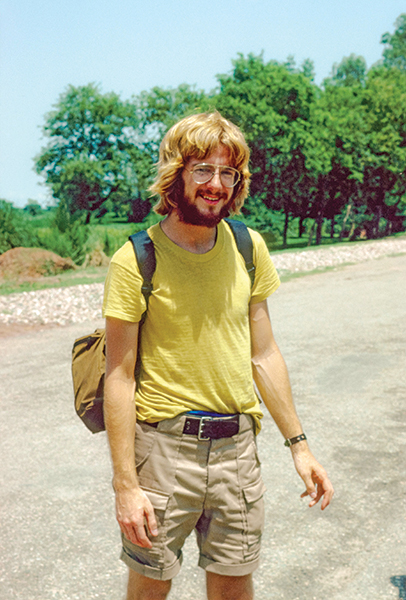
Sitting outside at Les Deux Magots, the legendary literary café in Paris, I am surrounded by the fresh air after a rainstorm and the warm sun peeking through the clouds. This iconic spot on the Left Bank has been a gathering place for artists, intellectuals, and writers such as Simone de Beauvoir, Rimbaud, Hemingway, and Sartre. I have just arrived in Paris after spending a week in Barcelona for the International Cannabis Business Conference and Spannabis, two of Europe’s most renowned cannabis events. As cannabis is not yet legal in France, I had to part with my stash of hash and other goodies from Spain before arriving. But the delectable pastries, people-watching, and the twinkling lights of the Eiffel Tower at night make for a fair trade. As I sit and observe the world passing by, I reflect on my recent adventures in Catalonia and the intersection of travel, culture, and personal freedom. My mind wanders to my conversation with Rick Steves, the beloved PBS travel guru, on my podcast “Planted with Sara Payan.” Steves’ books and television shows have inspired countless travelers to step out of their comfort zones and experience the world. But he is not just a travel expert; he is also a passionate advocate for cannabis legalization, a cause that aligns with his larger philosophy of freedom and harm reduction. As a member and former chair of the national NORML Board of Directors, Steves has used his platform to fight for sensible cannabis policies and normalization. In a time when the world feels increasingly divided, Steves’ work encourages us to rethink our approach to everything from drug policy to democracy, and from travel to personal liberty. One aspect of Steves’ advocacy for cannabis reform that struck me was his pragmatic approach to harm reduction. He emphasized the importance of moving away from outdated, moralistic views on drugs and instead focusing on practical, evidence-based solutions that prioritize public health and safety. Steves believes that a society that embraces “pragmatic harm reduction” is the key to addressing not just cannabis use, but all substance-related issues. “It’s not about legislating morality,” he said. “It’s about creating laws that recognize civil liberties while minimizing harm. Legalization is the clear path forward. We’ve seen it work in countries around the world, and now it’s time for America to catch up.” For Steves, the criminalization of cannabis users is a social justice issue. The war on drugs has disproportionately affected marginalized communities and has contributed to mass incarceration. “The black market for marijuana is a direct result of prohibition,” he explained. “Instead of making money for organized crime, the legal market can generate tax revenue that helps fund education, healthcare, and other important social programs.” As we sipped our coffee and watched the bustling streets of Paris, Steves shared stories of his travels in the 1970s, including his time on the “Hippie Trail” in Afghanistan. He spoke of the cultural exchange and understanding that can come from experiencing different ways of life, and how this can ultimately lead to a more peaceful and tolerant world. “Travel is a political act,” he said. “It allows us to break down stereotypes and see the humanity in others.” As our conversation came to an end, I couldn’t help but feel inspired by Steves’ passion for both travel and cannabis advocacy. His message of harm reduction, social justice, and personal freedom is one that resonates not just in the world of travel, but in all aspects of life. And as I sat there, surrounded by the beauty and history of Paris, I couldn’t help but feel grateful for the opportunity to have these conversations and to be a part of a movement towards a more open-minded and compassionate society.
Rick Steves Talks Travel, Cannabis and Freedom

Brand Spotlight
Follow Us
420 Singles