Cannabis and Proposition 215—the Compassionate Use Act of 1996—are intimately intertwined with the LGBTQ+ community. The reward was born from the guts of the AIDS epidemic of the 1980s and ’90s, a public health crisis in full view of an indifferent government. The moment compelled action. Amidst illness, the community found health. Amidst division, it found unity with voters at the ballot. Prop 215 protects a series of rights to possess, use, obtain and cultivate marijuana for medical purposes with a doctor’s approval, with transportation—the 5th right—added on appeal in 1997.
Let’s take it back to where it all started.
Beginnings in the Castro: A Taste of Freedom
Dennis Peron, a gay hippy, returned to the US from Vietnam with two pounds of weed in his duffel bag. With such precious cargo, he established his home in San Francisco’s fabled Castro Street as a “Grand Central Station” gathering place for quality cannabis and mind-expanding psychedelics—magic mushrooms and LSD—which were presumed safe and lean after thousands of uses. Locally grown cannabis was the standard. An aura of Mother Nature permeated the space, plants hanging from ceilings and walls, showcasing a healthy herbal way of life.
This grew into Island Restaurant in the Castro (food downstairs, herb upstairs). Taking place in a marginalized community, the spot was allowed to flourish for a time. Marijuana was so central to life in the Castro—a weave of medical and sexual freedom—that it mushroomed into a full-fledged movement.
California passed a major reform, the Moscone Privacy Act, reducing an ounce to a misdemeanor from a felony. Imagination was thriving. I vividly remember one community march for Prop W in 1978 led by the artist’s teenage daughter on roller skates. Brownie Mary was posting flyers of a cartoon of herself, eyes twinkling, holding a tray of steaming brownies with a way to get in touch with her. Every week, she baked hundreds of brownies out of her tiny apartment kitchen, using donated leaf from local growers. When Mary ran out of leaf, she and I would team up and I’d go to the country for pounds.
Even without much money, freedom was real and within reach.
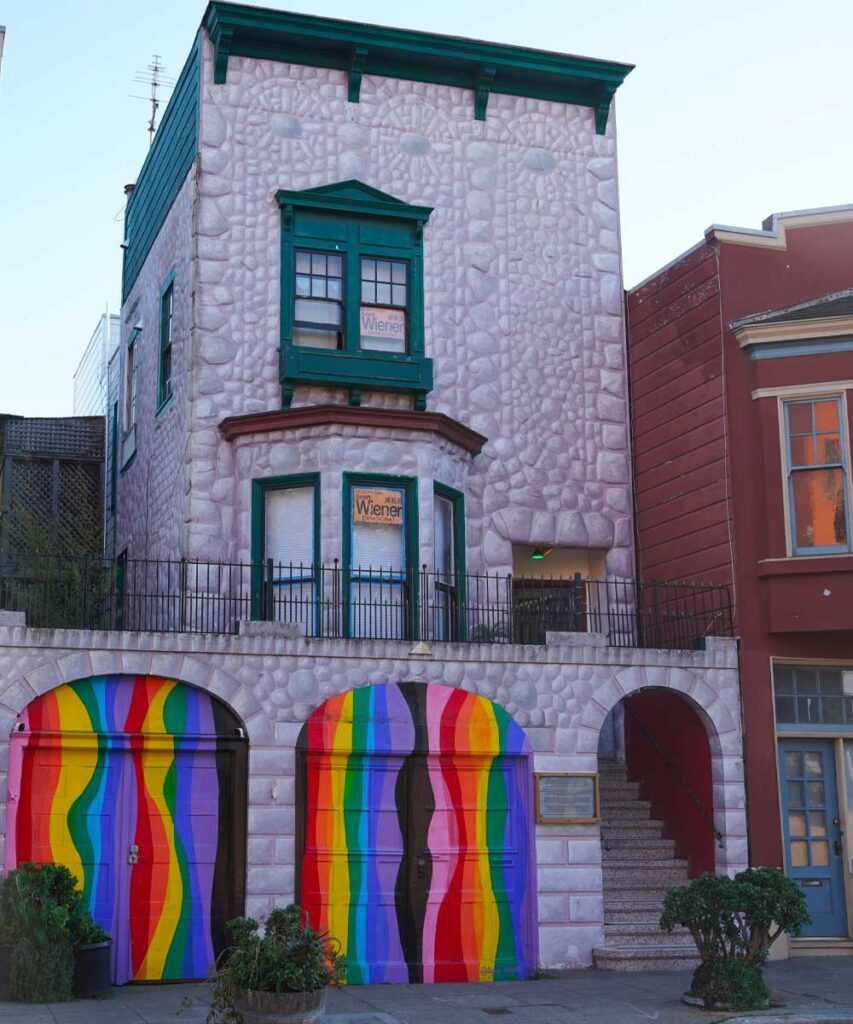
Dennis Peron’s Castro Castle in San Francisco’s Castro district. PHOTO John Entwistle
Assassination Aftermath
In the first week in November 1978, San Francisco’s Prop W passed by 58% with endorsements from Mayor George Moscone and Supervisor Harvey Milk, who were friends with Peron and the cannabis community.
We celebrated the victory.
But not for long.
Three weeks later, homophobic cop, Dan White, walked into San Francisco City Hall and assassinated both Moscone and Milk, two wildly popular public officials. “White Night” riots broke out. Police cars became fair game. An outpouring of anger and grief spilled over the edges at the insanity defense of the jive twinkie, used to escape conviction at jury trial. San Francisco absorbed the