
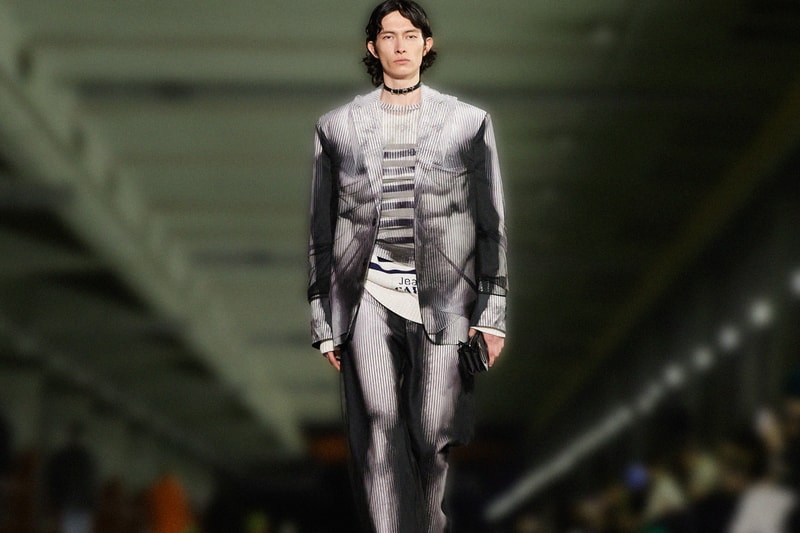
While some might find “Costume Art” to be a rather literal name for the Met’s next major costume exhibition, much like its “Fashion Is Art” gala theme, the title conveys the event’s main idea with clarity: the inseparable relationship between the dressed body and art history.Speaking to the forthcoming exhibition last February, curator in charge Andrew Bolton said that he “wanted to focus on the centrality of the dressed body within the Museum, connecting artistic representations of the body with fashion as an embodied art form.” Bolton added that instead of placing a primacy on fashion’s “visuality,” “which often comes at the expense of the corporeal,” Costume Art will instead focus on “materiality and the indivisible connection between our bodies and the clothes we wear.” The 2026 exhibition appropriately marks the official inauguration of the Condé M. Nast Galleries, a 12,000 sq. ft. space where the Costume Institute’s future shows will live.”Rather than prioritizing fashion’s visuality, which often comes at the expense of the corporeal, Costume Art privileges its materiality and the indivisible connection between our bodies and the clothes we wear.” — Andrew Bolton If this year’s themes seem rather conspicuous, the Y/Project suit seen across the previews is even more pointed in its statement. Designed in collaboration between the then-creative director Glenn Martens and Jean Paul Gaultier for FW22, the trompe l’oeil design reappropriates a classic men’s two-piece suit as the blank canvas for a halftone nude figure.For the duration of the show, the naked suit will be positioned next to a 1st–2nd century CE marble statue of Diadoumenos, drawing parallels between their idealized depictions of the “Classical Body.” Other featured garments will be divided into further categories like “The Naked Body,” “The Aging Body,” and “The Anatomical Body.”With its candid photographic depiction of the male body, the suit stands out from other looks shown in the previews, including the intricately made dresses by Dilara Findikoglu and Rei Kawakubo. Whereas many of the other works showcase interventions in form and a focus on feminine silhouettes, the Y/Project suit instead dials in on optical illusion and an overtly masculine form.Without closer investigation, it’s easy to write the Y/Project suit off as a contradiction to Bolton’s curatorial intention. Doesn’t the suit focus on fashion’s visuality with its two-dimensional graphics? Visuality indeed takes the front seat in the method of trompe l’oeil—the word itself translates to “fool the eye.”However, it doesn’t do this at the expense of the corporeal; instead, the suit directs attention back to the body, successfully “connecting artistic representations of the body with fashion as an embodied art form,” as Bolton describes. More broadly, it frames the exhibition’s proposal of the “indivisible connection between our bodies and
This Y/Project Suit Defines The Met’s “Costume Art” Exhibition

Brand Spotlight
Follow Us
420 Singles