
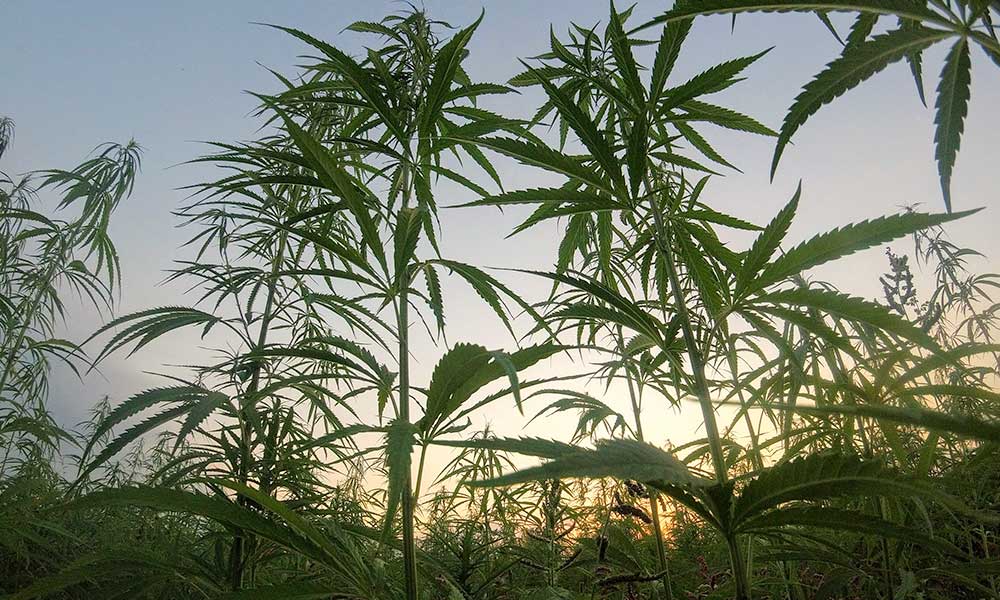
On November 12, President Donald Trump signed a spending measure that will fund federal operations through January, effectively ending the longest government shutdown in US history after 43 days. The measure had been approved by the Senate the previous day, with seven Democrats crossing party lines to reach the necessary 60-vote majority. These Democrats were swayed by a Republican promise to revisit the issue of subsidies for Obamacare in December. However, a controversial provision added to the spending bill has caused outrage in the hemp industry and among farmers in hemp-producing states like Kentucky.
The provision in question concerns what has been referred to as a “loophole” in the 2018 Farm Bill, which legalized the production of industrial hemp in the United States. While the Farm Bill maintained the federal ban on cannabis and cannabis products with more than 0.3% Delta-9 THC, it allowed for the extraction and sale of other cannabinoids derived from hemp. This had an unintended consequence, as it led to a boom in the production and sale of hemp-derived products containing psychoactive THC, such as Delta-8 THC.
In response to this backlash, a last-minute provision was added to the spending bill that will effectively ban all hemp-derived THC products. This provision, which will go into effect on November 12, 2026, restricts hemp and hemp-derived products to those containing low concentrations of all THC, not just Delta-9 THC. According to a summary from the Senate Appropriations Committee, this provision aims to prevent the unregulated sale of intoxicating hemp-based products, while still allowing for the sale of non-intoxicating CBD and industrial hemp products.
This move has sparked concern and pushback from the hemp industry, with media reports warning of an “extinction-level event” for the industry when the provision goes into effect. In Kentucky, where hemp production is a significant industry, Republican Senator Rand Paul attempted to strip the provision from the bill, but his amendment failed in a 76-24 vote. His main opponent in this effort was fellow Kentucky Senator Mitch McConnell, who had previously championed the 2018 Farm Bill as the majority leader of the Senate.
The provision is also facing opposition in Texas, where Republican Senator John Cornyn has expressed concerns about its potential impact on the hemp industry. The controversy surrounding this provision highlights the ongoing debate over the regulation of hemp-derived products and the challenges of navigating the complex legal landscape surrounding cannabis in the United States.