
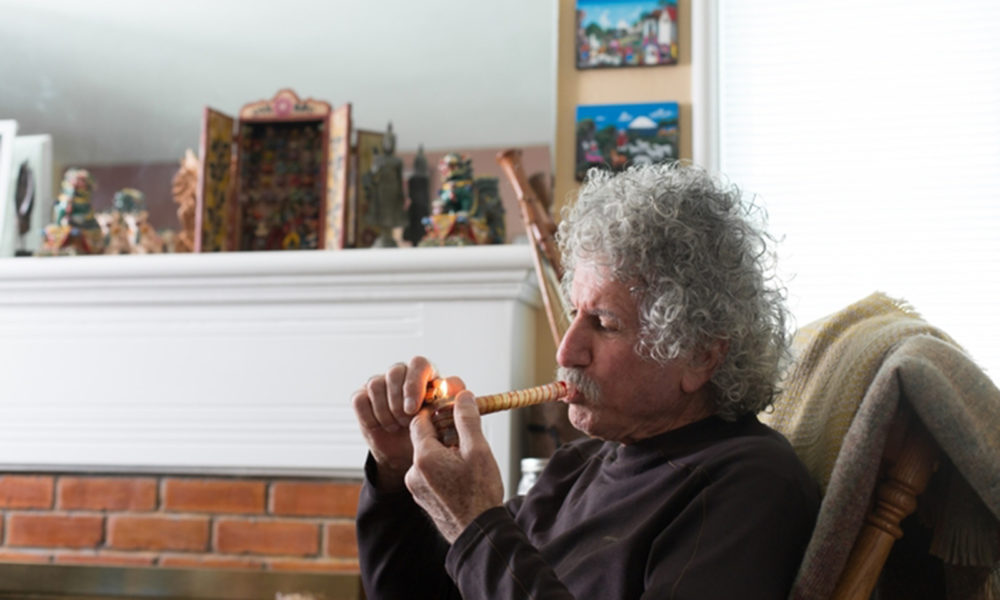
Steve, 51, vividly remembers the first time he got high. It was during his freshman year of high school, and his friend Chovi from India had found him on the handball court, where he was spray-painting images of Alfred E. Newman with a homemade stencil. Chovi, with his 4’6″ frame and massive afro, was a hilarious sight to behold. Steve had low expectations, having tried pot twice before with no effect. But this time, it turned out to be a creeper.
As he headed home, Steve felt like Albert Hofmann on his famous bike ride after discovering the formula for LSD. But suddenly, he found himself overly high and faced with a locked door at his parents’ house. He knew he would have to confront his mom, and the thought terrified him. “Oh God, my mom was going to have to let me in,” he recalls. “I couldn’t face her like that.” In a panic, Steve pushed past his mom and dashed up the stairs, locking himself in his room and blasting his KISS records. That was back in 1977.
Now, three businesses and a home in the wealthiest zip code of the Bay Area later, Steve finds himself enjoying a new wave of Mary Jane’s alluring wiles. But instead of rolling a doobie, he puffs on his vape pen. Steve’s story is not unique. Baby boomers all over the country are getting reacquainted with cannabis after a hiatus from pot during their middle years. According to a 2012 study by the Substance Abuse and Mental Health Services Administration, cannabis use among people aged 50-54 and 60-64 has almost doubled since 2002. Meanwhile, pot use among boomers aged 55-59 has more than quadrupled. And they’re not just dabbling – the National Institute of Drug Abuse reports that baby boomers are regularly consuming cannabis an average of once a week. And these numbers are only expected to rise. By the end of 2015, it was projected that nearly 111 million Americans over 50 would be cannabis consumers, with that number expected to increase by another seven percent by 2020, according to research by IBISWorld.
One of the main reasons for this “reefer renaissance” is the growing social acceptance of cannabis as both a medicine and a recreational choice. “When medical marijuana became a thing and I realized I could get a pot prescription and also manage my anxiety issues, that’s when I got reacquainted with pot,” says Steve. Studies suggest that boomers are using cannabis medicinally more than recreationally, often to deal with age-related issues such as chronic pain, depression, and rheumatoid arthritis.
The changing attitudes towards cannabis have also led to its legalization in many states, making it more accessible to boomers who may have been hesitant to try it before. With its potential to alleviate various health issues and provide a sense of relaxation and enjoyment, it’s no wonder that more and more baby boomers are turning to cannabis as a way to enhance their lives. And who knows – maybe they’ll even start listening to KISS again.