
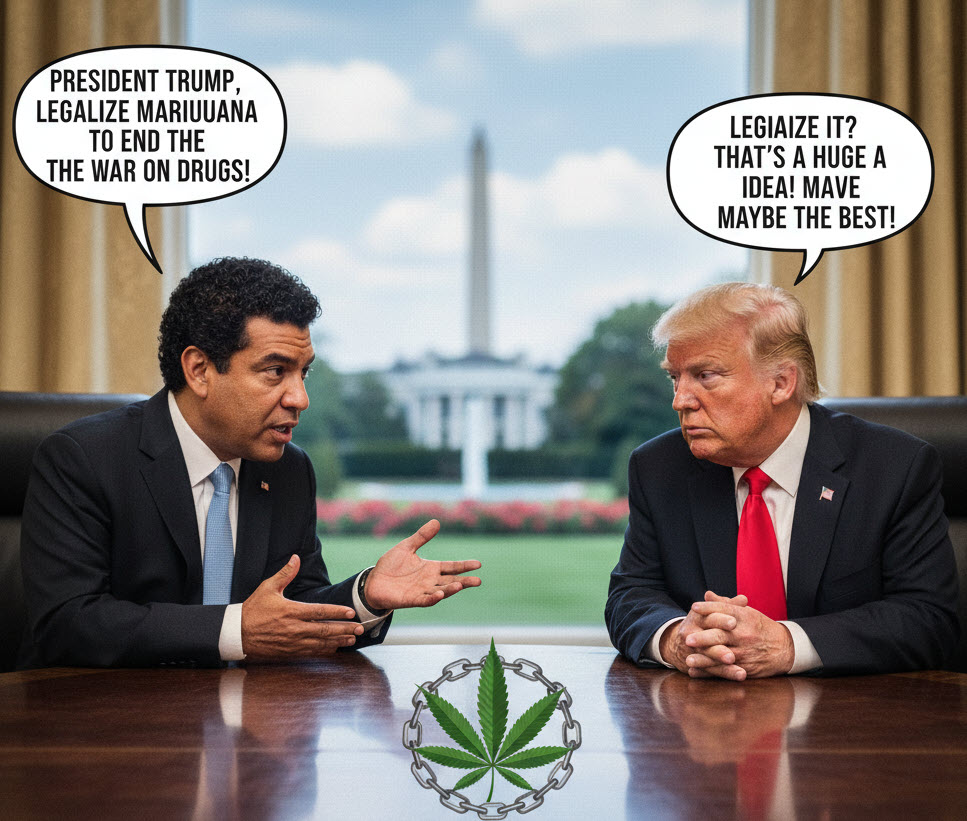
Last week, something remarkable happened in Colombia. President Gustavo Petro, known for his progressive policies and outspoken nature, did something unexpected. He publicly called out none other than Donald Trump, urging him to legalize marijuana and put an end to the disastrous War on Drugs.
But this wasn’t just some academic exercise or a progressive policy proposal. No, this was a passionate plea from a leader whose country has been deeply affected by America’s drug policies for over fifty years. And Petro didn’t hold back in his message to the US President.
In a bold move, Petro took to Twitter to address Trump directly, writing, “Mr. President @realDonaldTrump, legalize marijuana and end the War on Drugs. Colombia has paid the highest price for this failed policy. It’s time for a change.” And with that simple tweet, Petro sparked a conversation that has been long overdue.
For decades, Colombia has been at the forefront of the War on Drugs, bearing the brunt of America’s failed policies. The country has seen violence, corruption, and devastation as a result of this never-ending battle. And yet, despite the countless lives lost and the billions of dollars spent, the drug trade continues to thrive.
But Petro isn’t the only one speaking out against this failed approach. In recent years, there has been a growing movement, both in Colombia and around the world, calling for an end to the War on Drugs. And with the legalization of marijuana gaining momentum in many countries, it’s clear that the tide is turning.
So why is Petro’s plea to Trump so significant? Well, for starters, it’s a bold move for a sitting president to publicly call out another world leader. But more importantly, it’s a reminder that the War on Drugs is not just a domestic issue for the US. It’s a global problem that requires a global solution.
And while some may dismiss Petro’s words as just another political stunt, it’s hard to ignore the fact that Colombia has been on the front lines of this war for far too long. The country has seen the devastating effects of prohibition firsthand