
The New York Times editorial board frames its reconsideration of marijuana legalization as a thoughtful reassessment of new evidence. But it reads less like a discovery than a justification—an attempt to explain why a policy the board once championed did not unfold as cleanly as promised, with the responsibility shifted away from regulators and toward the public.
Let’s start with what is obvious. Marijuana legalization did not fail because cannabis suddenly revealed itself to be dangerous. It faltered because the United States legalized first and governed later. When access expands without coherent rules, usage rises. That is not controversial; it is predictable. It happened with alcohol after Prohibition, with tobacco in the twentieth century, and with gambling more recently. Treating increased use as proof of inherent harm is not analysis—it is hindsight. It also ignores a more important question: What systems were put in place to manage that rise in use, and where did those systems fall short?
The editorial, titled “It’s Time for America to Admit That It Has a Marijuana Problem,” has a core contradiction, which exposes the problem. Readers are told that occasional marijuana use is no more concerning than a glass of wine with dinner, while also being warned that many people end up worse off as their use increases. Both statements can be true. Neither is unique to cannabis. Excessive alcohol use ruins lives. So does gambling, debt, sugar and prescription drugs. Adult freedom has never depended on guaranteeing uniformly positive outcomes. It has depended on informed consent, age limits, guardrails and the expectation that individuals ultimately bear responsibility for their decisions.
Yet cannabis alone is being judged by a standard no other legal substance is asked to meet: harmlessness.
That inconsistency carries through to the proposed solutions. Calls for taxing cannabis by THC content or imposing arbitrary potency caps have no real parallel in alcohol policy. Whiskey is not taxed by proof. Beer is not banned because some people drink too much. Society accepts—correctly—that adults are allowed to make choices that involve risk. Heavy-handed taxes and caps do not meaningfully reduce harm; they revive illicit markets, distort pricing, and punish responsible users for the behavior of a minority. If history has taught anything, it is that overcorrection in drug policy tends to create unintended consequences rather than eliminate demand.
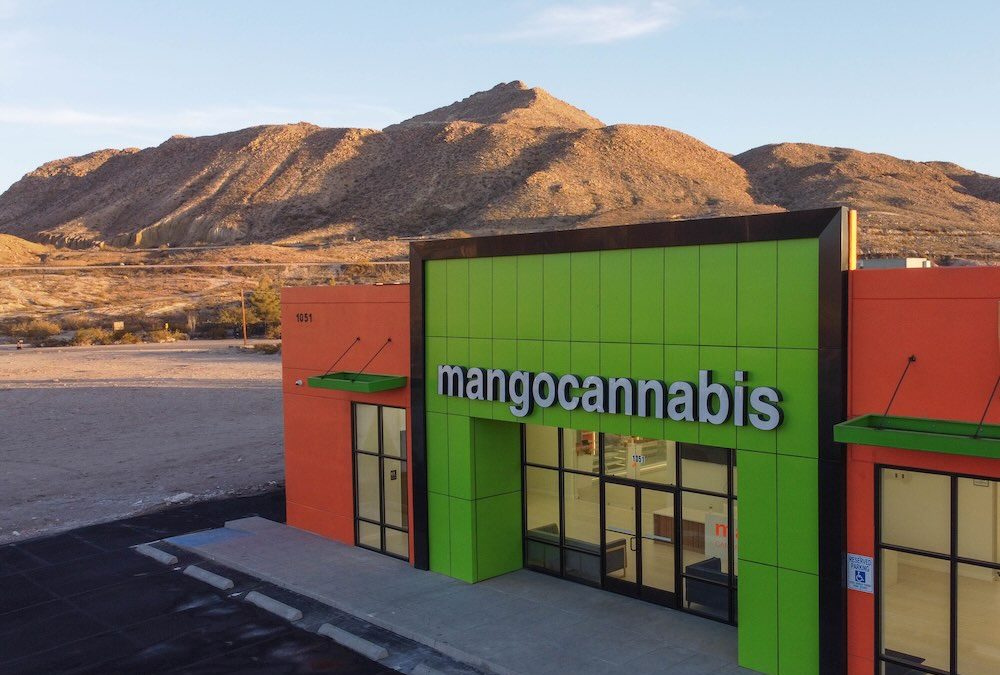
Mike Khemmoro is the co-founder of Mango Cannabis. Pictured here is their New Mexico store front.
The editorial also leans heavily on the specter of “Big Weed.” Yes, cannabis companies are for-profit. So is every legal industry. Alcohol and tobacco spent decades shaping regulation in their favor before the public fully reckoned with their costs. Singling out cannabis companies for operating within poorly designed rules, while ignoring alcohol’s long history of regulatory ca