
Every year, as the light softens over the hills of Humboldt and Mendocino, the cannabis world turns its attention to one of the most influential genetic selection events in the United States: the Humboldt Seed Company (HSC) Pheno Hunt. What began as a small internal project has evolved into a multi-farm, region-spanning collaboration that now shapes trends in hash, terpenes and genetic direction far beyond Northern California. With experts and connoisseurs from around the globe in attendance, it was truly one for the books.
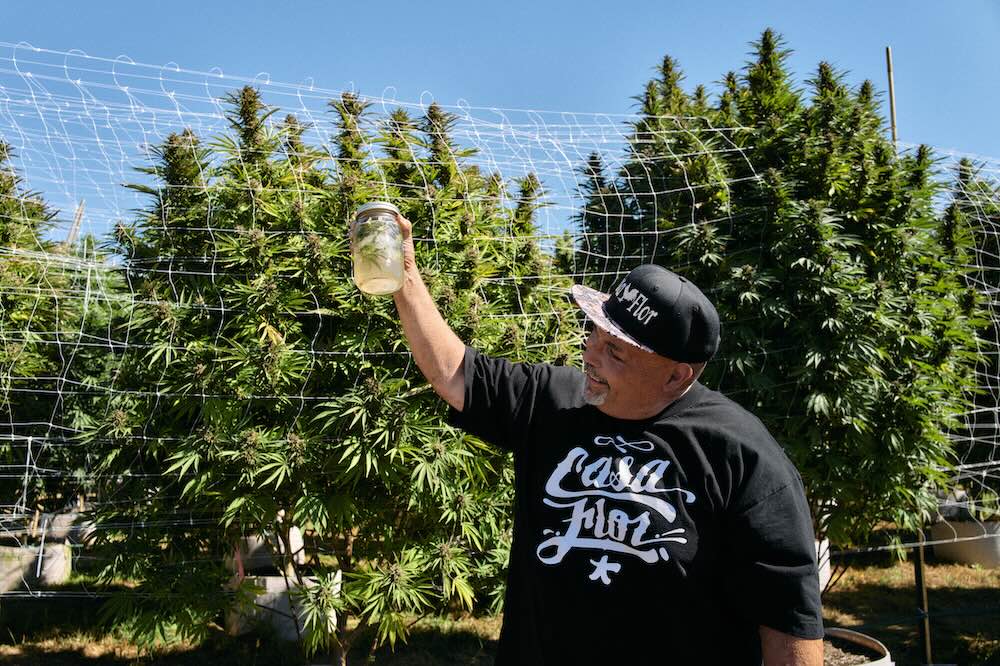
Spread across several notable farms in addition to HSC’s anchor farm in Humboldt County and satellite farm in Grass Valley, the crew visited Casa Flor, Wild Leaf, and Errl Hill/Black Bear. The hunt brought together a rare intersection of craft agriculture and modern extraction culture. With water hash extracts now sitting at the top of the connoisseur market—much like grand cru wine in its own world—the emphasis has shifted from how a plant looks in a jar and how it smells to how its resin behaves under ice, water and curing.
What Makes a “Pheno Hunt for Washers” Different
A traditional pheno hunt evaluates flower: structure, bag appeal, coloration, aroma and effect. A Pheno Hunt for Washers 2025, however, pivots the entire lens toward resin. Here, the question is not, “How does this bud look?” Instead, we ask, “How does this resin behave & live once removed from the plant?”
Washer phenotypes produce firm, sandy trichome heads that detach cleanly from the stalk when agitated in ice water. Hashmakers favor resin that feels gritty and dry rather than oily and soft. That sand-like texture is a sign of durable membranes and well-formed resin glands—traits that survive agitation, settle smoothly on the screens, withstand cold cure, and preserve volatile terpenes.
A plant with greasy, waxy trichomes may look beautiful as flower, but once washed, its resin collapses, smears and oxidizes quickly. Even loud terpenes and impressive structure cannot compensate for weak resin integrity. This is one of the reasons why breeders, hashmakers and connoisseurs insist that the real truth of a cultivar reveals itself only in the hash.
The Humboldt Seed Company (HSC) hunt embraced this truth fully. Each participating farm conducted wash tests; monitored how resin separated; observed melt behavior; and studied how aroma evolved once the plant material was gone. Only those phenotypes that excelled in this post-harvest world had a chance of becoming future hash staples.
From inside Err Hill Hash Lab in Humbdolt County, California. PHOTO Chris Romaine @KandidKush
Hash as the Final Lens: Where a Cultivar’s True Identity Appears
Flower can conceal certain imperfections. Density, frost or coloration may convince the casual observer that a plant is exceptional. But hash exposes everything. Once the trichomes are isolated, their architecture becomes impossible to hide. Melt quality, texture, terpene