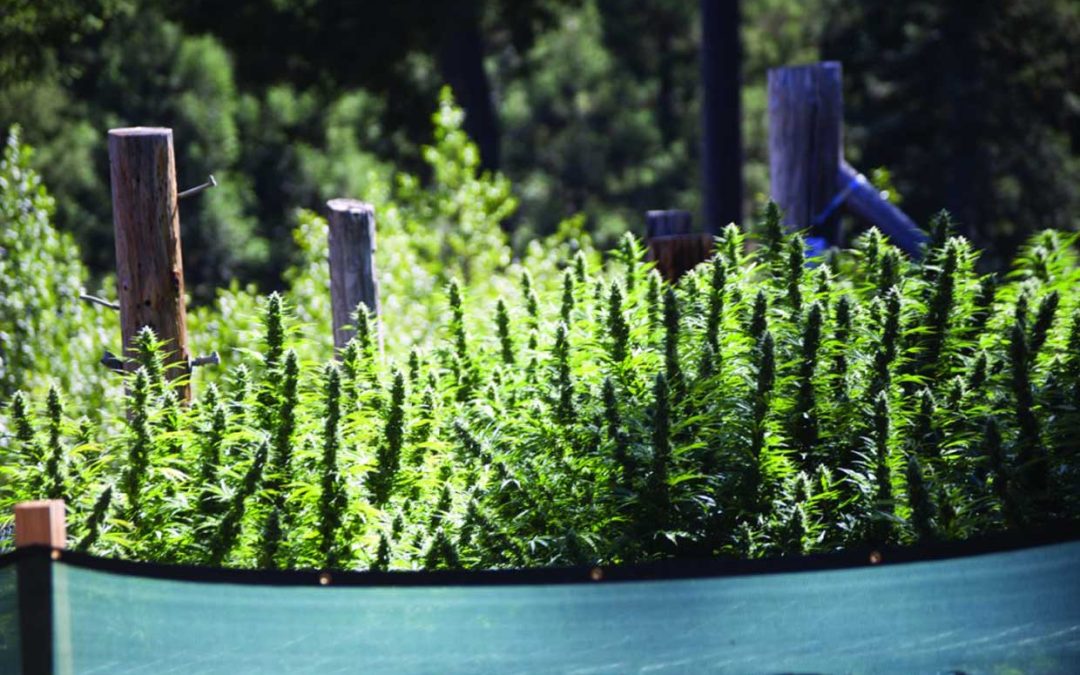
When planting outdoors, it’s highly probable that there will be problems that may leave plants in a less than perfect state. Even the best cocktail of nutrient and trace chemicals can still allow a nutrient deficiency. Grasshoppers may rear their ugly green heads or the nutrient will attract unsavory company, leading to an infestation that must be dealt with.
There are many variables to growing outdoors, but the most common of nutrient deficiencies will be encountered during the green foliage growth period. Lack of nitrogen is the most common deficiency. A large green leafy plant requires a very high level of nitrogen to achieve its full glory. The first sign is a gradual creep of yellow among the lowest and therefore leaves of the plant. If this happens, be sure to add a full ration of nitrogen to the next watering session. The yellow creep can be cured in only a few days if it hasn’t progressed to a point at which the tips of the leaves are curling and black or brown. At that point, it’s a permanent situation that can’t be remedied. It will be necessary to increase the amount of nitrogen so it doesn’t damage any newer leaves that would be higher on the plant. Some other symptoms of a nitrogen deficiency include red stems, smaller new leaves and slow growth.
A phosphorus deficiency rears its head by slow and stunted growth. The newer leaves of the plant will be smaller and a darker green than usual. As with nitrogen deficiency, a red color appears on the stems. The leaves may also develop a nasty red or purple color in the veins on the underside of the leaf. If phosphorous isn’t added, the older leaves will start to die. The affected leaves won’t be healed, but the progression of the damage will be stopped. The leaves will lighten in color to the beautiful green and the growth rate will pick up.
A potassium deficiency is often a tricky one to diagnose. Most of the time a potassium deficient plant will be tall and healthy looking, though they may be slightly phototropic in appearance. The indicators are the phototropic appearance and browning of the ends of the oldest leaves. A phototropic plant is one who expends all of its energy to reach a feeble light source, thus the tall spindly look they have. Recovery from a potassium deficiency is usually slow and is measured in weeks. The leaves that have been browned already usually die off. The leaves will have brown spots on them, particularly along the prominent center vein. As with most deficiencies of a serious nature, the stems and underside veins have a reddish or purple hue to them. The most common source of potassium is wood ash; so if last year the crop had a potassium deficiency, add a cup of wood ash this year to the nutrient or growing medium.
There are also deficiencies to be had with the elements iron, manganese, boron, molybdenum, zinc and copper. Because most outdoor growing mediums tend to be natural in source, nature has already included the other trace elements requir
Re-Coup Winter Costs: Grow Outdoor