
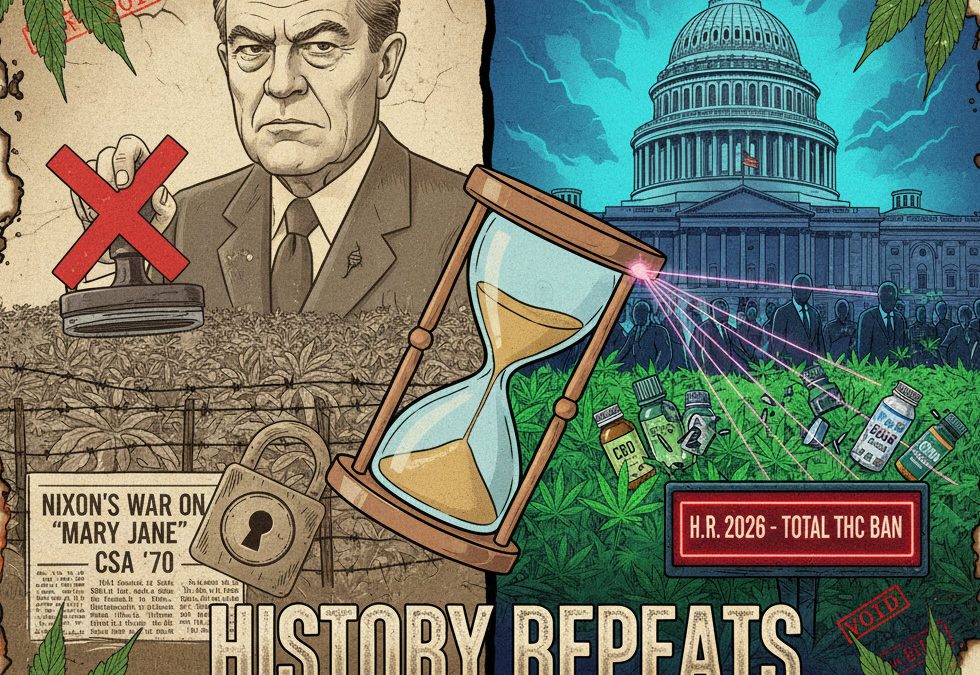
Fifty-five years have passed, yet here we are, witnessing the same game plan being executed with surgical precision. It’s almost like déjà vu, but with a modern twist. The 2018 Farm Bill, hailed as a groundbreaking legislation, legalized hemp – a type of cannabis containing 0.3% or less delta-9 THC – and opened the doors to a legal market for CBD products, textiles, and agricultural materials.
As expected, entrepreneurs wasted no time in seizing this opportunity. They saw the potential in building businesses around hemp-derived cannabinoids that technically complied with federal law, while still producing intoxicating effects similar to marijuana. And thus, a new industry was born.
With its trendy appeal and promises of health benefits, CBD quickly became the talk of the town. From oils and tinctures to gummies and lotions, the market was flooded with a plethora of products, all claiming to contain the magical ingredient. And consumers, eager to jump on the bandwagon, were more than willing to shell out their hard-earned cash for a taste of this so-called wonder drug.
But as with any new trend, there were bound to be some hiccups along the way. The lack of regulation and oversight in the industry led to a flood of low-quality and mislabeled products, leaving consumers confused and skeptical. And let’s not forget the controversy surrounding the actual effectiveness of CBD – with some studies showing promising results while others debunking its supposed benefits.
But despite the uncertainties and challenges, the CBD industry continues to thrive. And with the recent legalization of hemp at the federal level, it seems like there’s no stopping this green rush. Only time will tell if this trend will stand the test of time or fizzle out like so many others before it. But for now, we’ll just have to sit back and watch as history repeats itself, with a modern twist, of course.