
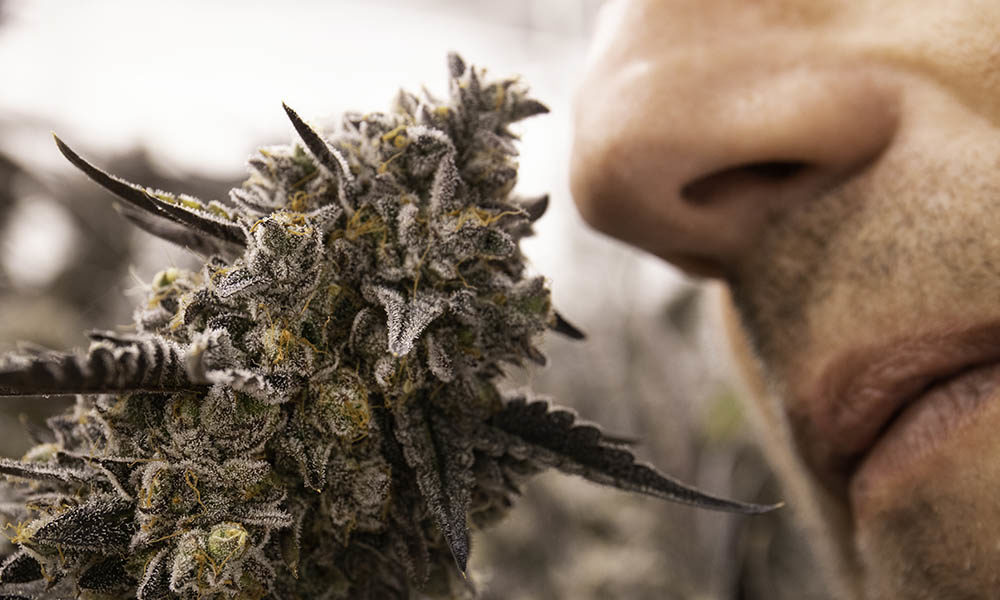
Cannabis is quickly becoming recognized as a product that can be appreciated and tasted like fine wine. This idea is gaining momentum nationwide, with California leading the way in promoting blind taste tests for cannabis. Chip Moore, a local chef, entrepreneur, and industry veteran, is the founder of the 4 and 20 Blackbirds collective. He has been treating members to the blind tasting concept, where participants do not know the strain names before sampling. This is followed by a discussion about the key characteristics of taste, smell, and effects.
In the hippy hamlet of Fairfax, north of San Francisco, the newly formed Herba Buena collective has also incorporated blind wine-style tastings. Co-founder Alicia Rose, who comes from the wine industry, believes that the “effusiveness of the aromas” should guide aficionados through the tasting process. She often makes collective members smell a jar of Herba Buena’s ultra-organic cannabis before revealing the strain. “I like them to smell and experience the flower before identifying it,” she says.
This trend is not entirely surprising, as the San Francisco Chronicle mentioned treating cannabis like wine as far back as 2007. The Clever Root, a farm-to-table foodie publication backed by the wine industry, has even included an entire column devoted to cannabis. Additionally, Marijuana Business Daily now publishes the results of blind taste tests in each issue. As cannabis continues to be normalized and elevated through taste-testing events like these, industry leaders are wise to borrow from the wine and food culture, further illustrating how cannabis can offer as much of a connoisseur experience as wine or fine chocolate.
If you want to conduct your own blind smell and taste test, here are some tips:
1. Make it truly blind. Participants should not know the strain they are tasting, as this can lead to sample bias based on previous experiences.
2. Choose rare strains. Popular favorites like Sour Diesel or OG Kush can be easily identified by their signature aromas, leading to biased results.
3. Pre-roll joints. Unlike wine, cannabis strains can be identified visually, so pre-rolled joints are necessary to ensure a blind test.
4. Take a “dry hit.” Before lighting the joint, draw on it to taste the terpenes at room temperature. This can reveal a lot about the quality of the herb.
5. Share the joint. Participants should not “bogart” the joint, as this can also lead to biased results. Encourage them to take small, slow hits to fully experience the taste and effects of the strain.